Monday, August 6, 2018

The Value of Roads?

One would think that, with the only access to a seacoast village to be by boat before ice comes in, that a village would be lacking in services, lacking in basic supplies, even perhaps lacking in vibrancy.  That is not the case for many of the towns, including Harrington Harbor, one of many stops found along the roadless portion of  the Cote-du-Nord, the north shore of the Gulf of St. Lawrence.

View of Harrington Cove from the water reservoir
First settled as a fishing station by the indigenous peoples, it was formally settled as a village in 1871 by the relocation of a few southwest Newfoundland families to the cove and adjacent islands, likely spurred by diminished fishing at the time off the Newfie coast, and now numbering over 300 people.

The only church - Anglican of course - built on the rock.

Like all the Cote du Nord villages, fishing is the prime occupation.  To assure sustainability, this community developed its own cooperative processing plant.  There is a welding shop, a small grocery store with some produce, a liquor store, school and a hospital with a helipad, started in 1906 as one of the Grenfell Association’s regional medical stations for fishermen.  Water comes from a small, dammed holding pond above the harbor, with 5 “filling stations” where residents can connect to fill their own reservoirs in their houses.

The "roads" of Harrington Cove

And there are no local roads.  Literally situated on a large rock outcropping, the structures are connected instead by a boardwalk system spanning between outcroppings of rock, started in the 1960’s, and now used as the “roadway” for pedestrian and ATV travel.  The main wharf, hosting a small fleet of local fishing boats and a docking station for our freighter/passenger ferry, the Bella Desgagnes, is also clogged with ATV’s when the ship arrives, picking up or dropping off goods or passengers.  The ATV is really an all-purpose, all-season vehicle that enables a measure of freedom.  The boardwalks are the roads.

The wharf when the ship comes in

I paid a visit to Paul’s Workshop.  His door open, I poked my head in and was warmly invited to see this incredible man-cave of a wood shop, complete with all manner of machines, most purchased used and reconditioned.  Retired at 58, he previously owned the liquor store with his brother, which enabled his retirement. He spends summers in the village making things for people, including wooden spoons and such, and demonstrated his homemade “spoon horse”, a device with all apparent appearance of a child’s toy horse, but with a foot operated clamping device to secure the spoon while carving.  In winter, he heads inland to his cabin, cuts wood and carves.  Having built his own workshop structure, he also has his own sawmill for board lumber, and works to restore old woodworking machines.  Somewhat incredulous at the nature of his operation, his resourcefulness, and his retirement at such an early age, he simply commented that he doesn’t spend much, doesn’t need much, and enjoys what he does.

Paul's Workshop

Quite a complete shop
Paul showing me his "carving horse"
    
I think that is likely a similar refrain of the other 299 people, and so many more along the Cote-du-Nord.

The small sign in the window reads:
"One thing I never have to worry about around here is competition"

Back on the ship, sailing for the next port of call, I considered the impact of no roads.  When asked when, if ever, Route 138 would be completed, Tanya, our hostess at Motel Blanc Sablon, expressed her strong doubts, since most of these villages are English speaking and of English descent (migrants from Labrador, Newfoundland and Prince Edward Island) and the government of Quebec has not made it a priority to link their French culture with these English settlers.  Whether or not this is true, these people have adapted to this way of life very well over the past 150 years – the villages attest to this.  They have a remarkable sense of community, they have what they need and want (or so it appears to an outsider). 

But as I sat on the foredeck in the afternoon sun, I considered the impact of the eventual completion of Route 138 on these towns, from Kegaska to Vieux-Fort/Blanc Sablon, Quebec.  It would certainly enable more independence of movement, less dependence on a weekly freighter, and likely lower the cost of living for these villages, provided fishing remains the primary source of industry.  But what might be really imperiled is not the town, but the deck of this very ship that I now enjoy, departed for lack of passengers and freight who choose instead to drive the route.  Over our collective world history, roads have been the economic engine of a region’s development and a way to connect communities, whether by horse, wagon or automobile.

I love ships.  Might I be experiencing some future nostalgia for the present journey?   

I will enjoy it while it lasts.

The Bella Desgagne docked - one of many stops along the Cote-du-Nord

Sunday, August 5, 2018

Defining the Perfect Ride

No two riders could describe the same perfect ride, but I am sure we could all agree on certain aspects of a perfect ride.

However, are we speaking of a single ride over a relatively short distance – say an hour or an afternoon?  Are we speaking about the entirety of an adventure: the good + the bad + the experience = a perfect ride?  Therein lies the judgment.

Departing Gros Morne, we experienced some rain, overcast and a tailwind to Daniels Harbor, partially along the coastline.  This gray theme was becoming too redundant. Riding further to Port-aux-Choix (meaning “port of choice” – three small harbors around which the town was constructed) was an evolving rolling landscape, picturesque in its own right with the sun desperately trying to chase the clouds away – succeeding for only a few hours in the afternoon, until we turned west to the Port, itself soaked in a thick bank of fog, unable to truly appreciate the splendid, treeless peninsula which we rode across to get to the town. But with a tailwind, anything is possible!

Chasing the clouds 

Departing Port-aux-Choix the next morning, still hung over with clouds, we traversed a “shortcut” along the shoreline, a beautiful, quiet, un-maintained gravel road through the space between the higher ground and shoreline, as the sky became gradually thinner.  And within a few miles after re-connecting on Route 430, we were riding in sunshine along a perfect shoreline for many miles, able to see and hear the waves crashing the rocks – with a perfect tailwind.  With a divergent course a bit inland to skirt a large bay, we hit the gently rolling hills with abundant sunshine, until we could spot the lighthouse in Flowers Cove, our stop for the day. This is the kind of ride that makes one giddy – a top ten ride for me.

The road best traveled - Flowers Cove to  Eddies  Cove

And it didn’t end there.  From Flowers Cove to Eddies Cove, a distance of about 20 to 30 miles, we were riding the shore under a crisp, clear blue, nearly cloudless sky, cool temperatures, with a beautiful tailwind, and the coast of Labrador visible to the west across the Strait of Belle Isle.  Thinking it was all over when we had to cross the highlands of the upper Newfoundland Peninsula, it was instead a beautiful run through this unique landscape – like an open tundra plain, with groves of short spruce, vast bogs and exposed rock plates.  And a tailwind.

The highland plains

The plains gave way to hills on the east side of the peninsula, hills that can punish the weary by their short steepness, but can nevertheless stimulate for the views and the thrill of the descent, but not always wind aided on this eastern coast.  We rolled into St. Lunaire-Griguet, a small town with a big heart, with one final climb.


But must the perfect ride be on a bicycle?

Consider our fate the next morning.  After getting to know the proprietor of a tiny local seafood restaurant for dinner (the Daily Catch), he indicated the potential for a whale tour the following morning at 9:00, originating out of his general store less than a mile down the hill toward the waterfront.  Now, our previous experience in a tour boat a few days ago – Western Brook fjord in Gros Morne - was a crowded affair where we were basically stuck with the spot we claimed when we boarded.  Today, Captain/Owner Keith (Iceberg Alley Boat Tours)  with his small, speedy hand-built launch, capable of seating 12, did this morning accommodate only Rich and myself for a personal tour of the bay and further into the Atlantic, under perfect skies and light winds, where we witnessed the rise and fall of many whales breaching the surface, along with a school of dolphins, and a visit to a ghost town vacated not so very long ago., but crumbling quickly under this punishing climate. There could not have been a more perfect ride!   But sadly, my one ambition to see icebergs melted away, literally, for we were but a few weeks late for the last of them (late April thru June, the sea is full of them, known here as Iceberg Alley).

This shot was a fluke!
 
And they got pretty close!

Surveying the cove at St. Lunaire


We then proceeded about 10km north to visit the object of our entire trip – the very tip of Newfoundland – L’Anse aux Meadow (this whole area is known as Vinland) - the site of a proven Viking settlement approximately 1000 years ago set on a treeless plain with the Atlantic unfolding to the north.  Dispatched by Leif Ericksson from Greenland, a group of 60-90 people “discovered” North America well before Columbus.  I guess for me, this was one of the older construction sites in the continent, aside of course from those settlements of native peoples, and worthy of a visit to put our location into a historical time-and-place perspective.  One could easily imagine the challenges life brought them for the relatively few years the settlement existed.

One of the original long house foundations - the slight mounded earth

Reflecting on this distant past, we rolled down to St. Anthony, the terminus of our visit to Newfoundland, and the start of our next journey to Quebec.

But that other perfect ride?  

A taxi with cabbie Preston giving us some cultural rendering of “Newfunders”, the absence of certain consonants in their pronunciation guide (“h” least prevalent), driving us back to fog bound St. Barbe for the short ferry crossing the Strait of Belle Isle to Blanc Sablon, on the Quebec/Labrador border, avoiding a wicked headwind across the headlands, and enabling our timely ferry connection. 

Main Street in Flowers Cove - the kind of stuff seen on a perfect ride

So what exactly was the perfect ride?  Bicycling along the coast? The highlands? The great weather (for the most part)?  The entirety of the four days from Port-aux-Choix to St. Anthony featuring great weather, scenery and cultural experience?  The taxi, whale boat or ferry rides?

For us, it is ALL part of the perfect ride.  But what all bicyclists can possibly agree upon is the impact of one singular aspect of a great ride – a tailwind!

Result of a good tailwind!

Sunday, July 29, 2018

Gros Morne

I am at a loss for the right word - just the right word.

There are really no words to express this amazing UNESCO Heritage site that Gros Morne National Park is.  Stunning? - It has that capacity to stun.  Breathtaking?  Indeed, it can, but it is really more than that.  And the two days we remained in the park is not adequate to truly understand this place.

Wrapped around Bonne Bay, an arm off the Gulf of St, Lawrence, it is a place that rises to lofty cloud borne heights seemingly right from the ocean. These mountains are more like the Appalachians, wide, rolling green capped hilltops rather that rocky caps, with the exception of the Tablelands, a massive dome of exposed yellowish peridotite, the result of a geologic uplifting of the earths mantle - and a rock hounds dream!

Tablelands and the predominant yellow peridotite

Following our "mummer" experience, we all decided that Woody Point is just the right town from which to visit Gros Morne.  Rich and I spent the day atop Tablelands, climbing to a high promontory, and exhausting all  possible photographic options - or so it seemed until we saw yet another picture.  We arranged our cab back to Woody Point to await the water taxi to take us across Bonne Bay to our next stop in Rocky Harbor, on the east side of the bay, requiring a hilly ramble to our next motel.

Water Taxi

Reunited with Clara, who spent the day riding in search of a beach (and never having actually found one) we all shared a room for the next two nights to fully explore the park.  But as the evening was young, we visited a local pub for dinner and a "kitchen  party" as it  was called.  This, a single musician sort of orchestrates audience participation in songs, stories and such, even handing out all manner of banging sticks and rattles to have the audience participate in the music, mostly Newfie tunes. It was a fun evening again, of dancing and drumming.

The next morning, Clara was hoping to  summit Gros Morne, but the weather was not in any way cooperative, greeting us in singular liquid fashion.  We decided to take a taxi to the trailhead for Western Brook Pond, having made a reservation for the tour boat that circles this long, narrow fjord.  We arrived in dense fog, and waited for several hours in which we talked of life forward, only to have the tour cancelled - logically - because of the fog, even though it showed signs of starting to lift.  So instead, we walked a trail for a short distance and sat by Western Brook that drains the lake, sitting on a rock, and gradually taking in the theater which was the mountains unveiling before us.  What a magnificent sight!  The clouds gradually lifted, revealing the immense height and steepness that is this canyon in late afternoon sunshine, however briefly it lasted.  It was actually a fun, mellow and serene way to spend the late afternoon before walking out and catching our cab back to town.  Most of the day washed out, but the best part was saved for last - dessert!

At the "theater" that is clouds lifting . . .
. . . to a perfect backdrop.

Following an excellent meal at Earl's Restaurant (where several had suggested the best moose in town - for me Moose Stew), we retired early, a bit spent.  But the next morning, packing up and catching some pancakes, we parted ways with Clara, our enthusiastic, delightful, energetic, funny and charming travel companion of the past several days. It was like travelling with my daughter Laura, who has a similar wanderlust and enthusiasm for exploration (but NOT on a bike). Such fun, but a certain sweet  sorrow.   Ride on Clara, as I know you will read this, and say hi to your Mum!  [Ed: And we later learned that Clara achieved her goal of summiting Gros Morne peak (a 7 hour hike) while we were on the lake.] 

Inside the fjord
Rich and I headed north for the upper peninsula of Newfoundland, but on the way managed to get the last two seats on the same tour ferry we missed the day before, as the cloud ceiling was high and no rain.  It was a stunning two hour excursion up the fjord, taking in sheer walls of rock plummeting into the fjord, graced with frequent and high waterfalls.  But the ferry was a bit crowded, and with a high cloud deck and a grey cast to the light, we both agreed the visual magic was not the same as the day before, as we watched this same canyon evolve, bathed in late afternoon sun. That will be my memory.

And the word?  Magical.  I think it fits.  Enjoy the scenery:

TABLELANDS:


What appears to me to be Helleborus - strangely beautiful

 Harebells (Campanula rontundifolia)

View to the high glaciers of the Tablelands plateau from our promontory

The main water fall, glacier fed

Such a variety of plant life in this "moonscape"

View of Bonne Bay from the high promontory

View down west valley from promontory

WESTERN BROOK POND:


The clouds starting to lift


Oh, the waterfalls aplenty!


An old wash out, used by Caribou to cross in winter
to the highlands on the opposite side.

The mouth of the fjord, from inside looking west

And the formations were endless.

Friday, July 27, 2018

The Characters We Meet

Aye, the characters ye meet!

One interesting aspect of bicycle travel is the people you meet - there is a certain camaraderie around a shared experience of the ardors of bicycling, drawing travelers into either casual conversation, or a more enduring experience.  Such is the case of my current trip to Newfoundland, Labrador and Quebec - our Cote du Nord tour.

A bit of travelogue is in order - Rich Freyholtz, my veteran travel companion, and I flew to Sydney, Nova Scotia and boarded a ferry for Port aux Basque, across the Gulf of St. Lawrence.  We sailed from bright, warm sunshine into a foggy, damp village, where it impressed me that the ferry could navigate, and indeed overwhelm the town in this small protected harbor.  Staying in the North Motel for the night, we took off, heading along the TransCanada Highway (TCH) in "mauzy" conditions - damp, wet, rainy in Newfie brogue - riding along a stretch of road with no services for some 60 miles.  Just  hills. Ever building hills - mountains to the locals.

The ferry dwarfing Channel Port aux Basque - discovered by Cook
As we ride separately during the day for the most part, I was well ahead of Rich when I came across  a cyclist stopped by the side of  the road hunched over his bike, and a heavily loaded single wheel trailer, just having a smoke.  He had the appearance of just coming out of the deep woods - heavy dark beard, no teeth (just lost them), definitely grizzled.  We chatted as I had asked if he needed assistance - "nope, just taking a break" - he was starting to ride again so we rode together for maybe 100 feet - "I'm a turtle, you go on.  Was riding with a girl. Fast like a rocket up ahead".  Getting the impression there was no more conversation left, I parted ways and rode on, getting pounded with rain.  At least the wet tailwind was a benefit.

Pulled up to the first convenience store since Port aux Basque (a C-store is a bikers best friend) and went to park my bike, when I noticed another bike, and pulled behind it.  No sooner had I done so than a diminutive woman wearing pink flip flops comes out and said "hi". It would be easy with her appearance to immediately consider her NOT to be a bicyclist.  Flip flops as riding shoes?  I asked her, somewhat incredulously, if she was the bicyclist (with a huge load on her bike) and she was.  That was the start of a long conversation.  Escaping the rain, we went inside to a small restaurant attached to the store and chatted while I awaited Rich to catch up.

Meet Clara Valcarcel, a 27 year old Spaniard living and working in Toronto, mostly as a server, to learn English and experience foreign travel for a year.  With her degree in architectural technology, we had something in common.  She left Toronto June 2nd, seemingly on a whim as a bike tourist, picking up second hand gear - too much of it!  As we were chatting - and dripping - over vegetable soup, the grizzled "turtle", Danyel Guy, he for two days travelling companion of Clara, arrived, followed shortly thereafter by Rich.  So we all sat, ate, dripped and talked.  Turns out we were all planning to stay in the only motel for a long time - the Midway Motel, perfectly named by its location  between  Port-aux-Basque and Corner Brook - a vintage 1974 motel, long in need of repair, owned in the same family all those years (and of course for sale), but quiet and clean - we were the only guests.  And she permitted us the necessary use of her dryer!

Now a bit about Danyel, an itinerant traveler and carpenter, he carries his 28 oz framing hammer with him.  Loaded with stories, he ardently spoke of how to repel bears (with a "porcupine" stick), how to keep a herd of elk from rampaging your camp (pop balloons, but have them ready in the tent), and that his sharpened claws on his framing hammer is much better than an axe.  We were fairly in stitches, if a bit incredulous, at these tales, but it managed to bond the team.

As it was raining the next morning, we all took off for Corner Brook, Danyel's final destination.  Again, there were no services along the entire stretch until Pinchgut Lake, a mere 10 KM from Corner Brook.  So it was a long haul across many hills, lakes, and quite beautiful country - it you could imagine it!  Clara and I rode together, as she is absolutely one of the few people that can actually keep up with me over the long haul, even with her overloaded bike.  Rich and Danyel followed about an hour behind, catching Clara and I in a small restaurant alongside Pinchgut Lake, eating pie and having a good hot cup of tea.  Life is good!

Rich, Peter, Clara and Danyel

We hustled the last 10 kilometers into Corner Brook, a larger city/regional center, while the skies finally started to clear.  Danyel and Clara stayed at a friend of Danyel's, and Rich and I holed up in  the Grenfell College dorm, open for travelers. We all agreed to meet for breakfast.

It was a farewell breakfast for Danyel, who overnight had already picked up a 4 week gig as a rigger.  As a rough and ready type, he seemed genuine in his appreciation of our company over the past two days, and also of the riding cap I gave him.  Parting ways with hugs around, Rich, Clara and I headed out of town when the second flat of the morning occurred for Rich, so he went to the only bike shop in this region to get it looked at.

As our riding mantra is "just go", Clara and I headed up toward Deer Lake, our turn-off point to the Gros Morne Provincial Park,with a gentle ramble along the lake amid overcast but dry skies and cool temps.  Following a respite at a C-store, we turned west on Rt 430 toward the Park with a long steady climb, and a few long, steep climbs as we approached the tiny hamlet of Wiltondale, where the entrance center was.

Peter and Clara at the entrance to Gros Morne
Pausing for information and desperately needed food, we proceeded on at a late hour toward our final destination, the west shore of Bonne Bay and the village of Woody Point.  Finally, a quiet country road, and plenty of photo opportunities, but a few massive mountain passes to cross.  I was gassed - my quads were "barking" and I resorted to walking some of the steeper hills.  But the difficulty of the terrain was made only slightly better by the stunning scenery - with no rain and sun starting to peek out.  And then, a van pulls up, Rich pops out - he had continuous flat problems and gave up just outside of Deer Lake without enough spare tubes, and grabbed our panniers.  Riding without panniers Clara was a bird flying up the hills, and I was the turtle, so she helped me get through to a monstrous descent to Bonne Bay. We were both enthralled by the scenery, making many stops for pictures before pulling into the Victorian Manor Inn, a delightful fourplex with a great view to the Park.

Beginning the descent to Bonne Bay as the clouds broke

Bonne Bay -Woody Point in the distance
We showered and headed down into this small, very quaint town for dinner at a pub - the Merchants Warehouse - complete with fish and chips (fresh cod), Newfoundland beer (their Quidi Vidi1892 label is highly recommended), and an interesting local tradition: mummers. Coming into the pub, dressed in face-hiding costumes, a group of (presumably all) women danced to the music and encouraged our participation to celebrate 5 months to the day until Christmas. Tradition has it that "mummers" tour the town at Christmas, their faces and identities hidden in exchange for "gifts" of libations, until their identity is revealed.  For the visual mummer experience, this video clip:


We three danced, drummed and participated in the festivities, making it a great way to end a great day, and also to recall all the characters we meet on the way!

Rich and Clara whirling and swirling

Friday, June 8, 2018

Convergence

I have just finished reading Washington by Robert Chernow – this followed his biographies of Grant and Hamilton, Joseph Ellis’ excellent book Founding Brothers and The Quartet (on the constitutional convention), all started by David von Drehe’s most excellent book on Lincoln, Rise to Greatness, on his most perilous year during the Civil War - 1862.  Over the past year my reading list has immersed me in our own history, mostly out of a passion for history, but also to better understand the lunacy of today’s political environment.  

After so many pages of our history, and a thorough grounding in the very foundation of our democracy, I can truly say that history does in fact repeat itself, and that the basics of human nature have not really changed.  The lunacy of today has roots to our very founding.
It is entirely accidental that I happened to finish Washington while travelling to Washington DC this past week to attend two conferences (one on Construction History – get a life, Hilger!).  

I was humbled upon visiting Arlington National Cemetery, the former estate of Robert E.  Lee, son-in-law of George Washington Custis, adopted grandson of George Washington and grandson of Martha Custis Washington, taken over by the Grand (Union) Army of the Republic in 1861 when Lee refused command and instead chose to command the Confederate army.  Aside from that convergence - not unusual when talking about Virginia planter families in the 1700’s – what struck me most was the reality of all the lives lost during the civil war – 618,000 Americans -  most of whom are not buried here.  In fact, families of the fallen were required to come pick up their loved ones from the area of battle and bring them home.  Arlington cemetery grew out of necessity as a paupers grave site to bury unknown soldiers,  to inter soldiers dying from rampant disease encamped in DC, awaiting orders, in total over 16,000 graves.  Quartermaster General Montgomery Meigs, the developer of Arlington, planted the early graves alongside the beloved rose garden of the Lee estate to spitefully ruin its effect.


And yet slavery was so contentious during the constitutional convention, who ultimately resolved to “kick the can down the road” at least 20 years (and much longer due to the invention of the cotton gin).  The arguments of our founding fathers, presided upon by a stoic, neutral, level headed George Washington, would easily rival any of our contentious debates of today. It is interesting to speculate that our country could have been two or more countries – Federalist north and Republican south (though parties did not formally exist) - and not a united nation for the simple fact of slavery as an economic engine, had the north persisted in its early abolishment in the 1780’s. 

And so we leave it to Lincoln and Grant to eventually solve this problem, and what pain they suffered, both personal, political and in blood.  Lincoln was, in many ways, an “accidental” president, for he was never the favorite son at a highly divided convention, but emerged as a compromise candidate.  And he was not even considered an abolitionist at first, but recognized that the issue had finally boiled over as was so presciently predicted at our founding.  And so his most difficult year – 1862 – is what planted these simple white markers at Arlington.  Sad.

Washington also struggled with slavery all his life – one of eight President’s to have owned slaves – largely, so he believed, as an economic necessity and to maintain his Virginia planter’s social status. Yet he struggled financially all his life, and always refused salary from the Government or military for reasons of honor and integrity. At the end of his life he was beginning to realize that, with his interest in improving agricultural practices and productivity at Mt. Vernon, and his branching out into flour milling and distilled spirits (even though he abhorred liquor), he spent more time fretting how to support his burgeoning slave population. In his will, he decreed the freedom of his owned slaves after Martha’s death, but she released them during the two years she remained alive. And all this worry about Mt. Vernon, his farm and overseers, was his continuing obsession even in the heat of war, or the heat of politics. 

Mount Vernon - where GW found his greatest peace
And those politics!  I confess to my own naivete about our early history – recollecting only that standard high school prattle of the 1970’s – things about honesty and cherry trees, and unquestionably holding up the virtues of all our founding fathers.  My reading has taken me to the darker parts of our history – the bloodletting feuds between our founding fathers, swirling forcefully about Washington, who held the outward countenance of stoicism, thoughtful contemplation and decision-making – leadership!  The Hamilton-Adams/Jefferson-Madison feud would dwarf our current political malaise, especially adding in a bunch of other characters.   We could not presently abide a cabinet member like Madison deliberately and quietly subverting Washington’s leadership – or could we?  The personal correspondence amongst them and the psuedonymic pamphlets bleeding scathing appraisals of their characters were especially vitriolic – not even equivalent, in my mind, to the “fake news” mania of today.  
 
I listened to many people recently railing and worrying over the current political climate.  And I can only state, quite assuredly, that we have seen this before, and when we think the country is swirling the toilet, think again!  We almost lost our democracy not once, but twice in our history – the constitutional convention and the first Presidency of Washington, and the Civil War under Lincoln’s and Grant’s guidance.  And through all this our republic survived, perhaps it could be said, stronger than before.

Washington Memorial in Baltimore - with George at the top,
and Lafayette on horseback.
History repeats itself.  So why do we ignore or try to wipe out our history, especially the painful parts of our past existence and survival?  Would we knock down the first memorial constructed to honor Washington - in Baltimore - just because he owned slaves? The tendency to remove statues and memorials to our early President’s who owned slaves, and to the Confederate’s that tried to protect it, fellow Americans who almost succeeded, and luckily failed, is in my mind appalling.  The pain of these memories is the unlikely salve to our current condition.  We must never, ever forget this history, to know its meaning and impact, and to know that we almost did not become America because of it.  Understand history, and today is just a repeat. We shall survive, and might even gain strength therefrom.


My trip to Washington this past week, and finishing the book was my convergence.  From the solemn view of Arlington Cemetery, to visiting Mt. Vernon and the first Memorial to Washington built in Baltimore, to visiting the Pentagon and seeing portraits of many honored citizens in our democracy, to understand what a great and gifted man Washington was, in spite of his many flaws, to see an excellent display of slavery’s impact at Mt. Vernon, to honor Washington at his tomb, and finally, on Memorial Day, with my grandkids sitting along Constitution Avenue, watching Washington, Grant, Lincoln and other soldier re-enactors march in celebration of our constitutional freedom,  and the memory of the citizens defending that freedom.


GW waving to the crowd on Memorial Day.
I confess a lump formed in my throat witnessing this scene – convergence.  Consider this:

On his last day in office, March 3, 1797, speaking to Jonathan Trumbull, Jr., Speaker of the House from Connecticut, Washington said: “I trust . . . that the good sense of our countrymen will guard the public weal against this and every other innovation, and that, altho[ugh] we may be a little wrong now and then, we shall return to the right path with more avidity.”

Friday, February 2, 2018

Jane

"Has the aura of Costa Rica dimmed yet?"

So was the question a few days ago to Jane, my colleague at the University, on the occasion of our return from a joint trip to Costa Rica, this the fifth anniversary of my first trip with students to San Ramon.  It has been a few weeks since we returned, but no sooner do we return than the intensity of the semester is upon us, and aura's quickly fade.


We work with people day in and day out, and know them to be colleagues.  So it was with Jane.  I knew she worked as an Academic Adviser for our new Health Services Management program though we never really interacted except the polite passing in hallways. Since we have expanded our study abroad program to include all programs within our college, we were fortunate to have had a few HSM students register for the trip, and Jane was pegged to accompany me to learn more about San Ramon and the opportunities, present and future, for her program and students.

Jane was a colleague, and now is a friend.

For me, returning for a fifth time was like returning to a familiar neighborhood where only a few things have changed, but much remains the same.  There were no heightened expectations - I knew what to expect and what to do.  But for Jane, she was experiencing the city for the first time, and no doubt reacted much the same way I did 5 years ago - with wonder and just a bit of trepidation - for she was without me for the first few days while I attended to a friend's funeral. After 5 years, I forget that early wonder, and just seek out what was different from the last visit - and learn just a bit more Spanish.

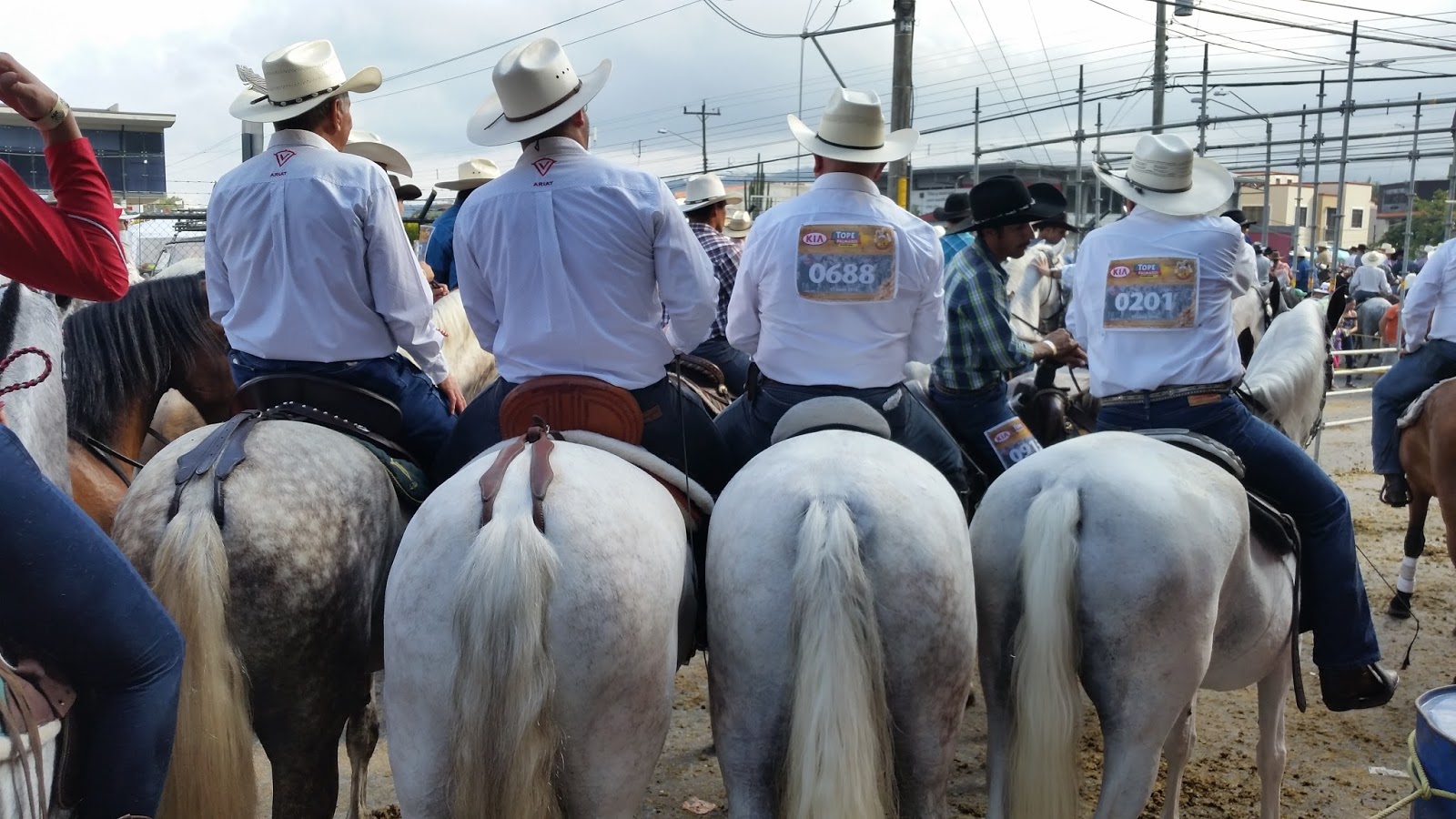
As is my custom, I walk a lot when I am there, and Jane was my constant companion on this trip, whether on our 6AM  saunter into the hills, exploring the corners and ravines of the city, exploring the neighborhoods clinging to steep hillsides, mesmerized by the crowded whiteness of the cementario with its above-ground white tiled vaults, taking the cool air, wind and sunshine in stride - literally.  We would walk in the evenings when the "kids" were at work or play, taking in the city lights from a local hilltop near the University before descending into the center of town, taking a cup of ice cream and a bench in the town square.  She tutored me in Spanish on those walks, as she had spent quite some time years ago in Mexico, and the language appeared to recover quickly to her lips. We took in an amazing sunset on a nearby hilltop crowded with locals enjoying the same view, followed a few mornings later by a walk to the same vacant hilltop to see the low, rising sun casting the distant Osa peninsula in a pinkish grey veil, while the wind could have nearly swept us away with its ferocity.  Or skirting the crowds and getting a behind the scenes look at the Palmares Horse Festival.


Unbeknownst to each other, for perhaps this "dirty little secret" must be kept to ourselves, we even took a somewhat ironic, mutual interest in bringing the tub-style dish soap used at the hostel home, laughing at the hilarity of us gringos, scanning the mercado aisles for the desired tubs, gleeful in our practical souvenir.


 Anticipating taking her to Manual Antonio Park on our weekend trip to the beach, I sensed she would be inspired by the monkeys, if only we could find them.  With the confidence of a guide who has traipsed every corner of this park for three years now, we entered the park shortly after it opened, and wound our way to where I was certain the howler monkeys existed - but there were none!  For sure they are on the "other path", for we could hear them in the distance - but the trail cerrado (closed)!  Certain my guiding skills had run out, I suggested we head out around Cathedral Point -  itself an island connected by a narrow beach peninsula.  And then, shortly before completing the loop, eight howler monkeys entertained us as we lay down on the trail, looking up to avoid the certain neck strain their entertainment would cause.  It was pure magic, and no amount of good luck!

Engaged in scholarly research!

Dustin and Melissa Dresser, our program hosts in San Ramon, arranged a separate accommodation  for our weekend use, a block away from the hostel where the students stayed.  At first, I was surprised and a bit suspicious of the location, for the "lobby", in somewhat typical Central American style, was nothing more than a tiny room barely big enough for two small desks and some standing space. With an un-inviting solid steel gate immediately fronting the main sidewalk and the busy, noisy road, the hotel rose unseen above and behind us.  Climbing a circuitous path of steep stairs and narrow overgrown walkways, past a small pool, we were led to what might have otherwise been termed a tree house, a large suite with an expanse of windows, high above the bustling road with a fabulous view of the ocean to the west.  A small balcony mesmerized us, as we watched all manner of wildlife from that deck: a pair of colorful macaws, several toucans, a large iguana in the treetop across the street, motionlessly lounging close to a sloth, with a steady stream of capuchin and even the more rare squirrel monkeys parading through the tree tops.  We had seen all the wildlife imaginable, even the rare red eyed tree frog on a night time jungle tour.

Oh, that balcony!
It was easy to see how this place, the culture, and the experience, both with and without the students had transformed her early frown lines of anticipation with the relaxed "smile wrinkles" of wonder and delight on her face.  No longer a mystery, but an adventure!  And for this veteran, who five years earlier had harbored those same wrinkles of anticipation, it was a delight to witness her engagement with the students, her absorption of the culture, our mutual uncertainty dancing the meringue (though we got one move down - for at least a moment) and her humored tolerance of my singing, poetry and puns (68 as counted by my students, who had a pool going).  We just had a lot of fun!

Oh, the local "sopa"!

And so the question of the aura hung for but a moment the other day, as I could see her mind recalling the adventure with rapt memory.  Oh, those memories must certainly have caused some distraction from her day-to-day activity, for she stopped by my office a few days ago, and somewhat apologetically, handed me a belated card:


Smiling somewhat rapturously she replied: "Yes, I'm still feeling the aura."


I'd say she is!  Pura vida!