Thank you all for coming today, and sharing your warmth and friendship for David on this sad occasion, but I assure you, David would not want us to be sad. One of his dear friends wrote, and I quote: “You also have experienced David. And you each experience your feelings and stories of loss. I should talk about celebrating his life, which we all do and will continue to do. But right now, all I can think of is missing him.”
I am honored to have been
asked by Carolyn and Eric to celebrate David’s life today, and also honored to
have been named by David, quite to my surprise, as the executor of his estate.
The most important thing I
can share today, is addressed directly to you Carolyn, and you Erik: David loved you more than anything else in
the world. He spoke of you often, to so
many people. He would never want you to
forget that, as hard as life has been and will be for you. He has bonded forever in your heart and
soul. And I pledge to make this
transition as smooth as I can for you – it is what he wished for.
I am Peter Hilger, and have
known David since 1983, when we were thrust together as two young
professionals, he an Architect, and me an Architect and Assistant Construction
Manager on a complicated building project called Renaissance Square at 5th
and Nicollet downtown.

Who knew that, as
a result of that meeting, I would be standing before you today, with a long
history that I could recite, but will not.
For this is not about me, this is about all of us, with unique and distinct
memories that are crying for release at this time, because we miss him already. So, before I share some of my memories, I
wish to extend a few of the numerous remarks and remembrances I have received
over the last several days from others that could not be here today, so their extended
voices can be heard to give you all the glimpse of the man we have known and
loved.
As many of you know, David
had a huge global footprint. His love of
travel, of the earth, of nature and
beauty and the spiritualism derived therefrom is well known.
This, from Rick MacLeod Farley, a consultant from Ontario:
“I have many, many fond memories from working
with David on various ecotourism and Indigenous tourism projects across Canada
over the last two decades. He was a brilliant architect, and he had an
incredible gift for connecting with Indigenous communities and peoples and
translating fundamental aspects of their culture and heritage into incredible
project site plans and building designs.
The shock waves from David’s sudden passing are rippling across the
planet that he cared so much for and did so much for, including the Bahamas,
Japan, Malaysia, Jordan, Kenya, [Vietnam,
Central America, Canada], etc.”
Echoing similar sentiments, from
Mike Robbins, a long-time client with the Tourism Company in Canada
David was extremely talented at his work and was
a lot of fun to travel with. David’s curiosity about the world, his immense
creativity, his love for nature and his respect for indigenous peoples and
their cultures inspired many of us.
This from Kelly Bricker, Professor in the Outdoor
Recreation Education and Tourism Lab at the University of Utah:
“. . . he has been an inspiration in creating
what is possible to help others experience the wonders of nature and protect
the planet—he was a kind, positive, gentle soul and will be missed by the
ecotourism community and the planet—his work and inspiration will carry on with
each and every project and through each and every person who had the pleasure
of meeting David.”
From Karen Lewis, founder
and Owner of Lapas Rio lodge on the Osa Peninsula in Costa Rica, one of his
earliest eco-tourism projects that launched his global reach:
David, un poeta visionario, coined the 25-year old Lapa Rios Vision Statement: No matter how you cut it, a rainforest left standing is worth more. Thanks to David, Lapa Rios offers an alternative to socio-environmental exploitation.
Our
first day in the Osa (January 1991), seeking sites suitable for building,
together David and I walked previously slashed/burned hilltops. We chopped
head-high grass, avoided snakes, and ran endless measurements. Then, with
limited language skills yet armed with confidence, new friend David discussed
traditional building designs with local builders, held and examined available
renewable materials, tried to discuss roof slope—untrained builders show angles
using hands not discuss “degrees of pitch.” So grabbing his sketch book, David
drew a main lodge, then a cabin, and garnered great admiration and approval.
His design used little wood yet bundles of cane, bamboo and palm thatch—materials
utilized for centuries. David’s patience with unrefined builders and local
suppliers deepened our relationship with the community and increased
cooperation. David helped demonstrate working collaboratively can both
re-inform traditional design and improve building skills.


From Dr. Colleen Scanlan Lyons, Co-Director of the Laboratory for Energy and Environmental Policy Innovation at the University of Colorado:
“I traveled to Costa Rica with David, and have
great memories of him “getting to know a place and its people” that would, in
time, inform his design work. David would rise early morn, sit on his porch,
listen to the birds, observe the start of the day, and sketch. It was clear
that he gained inspiration from the natural world, and that he used this
inspiration to fuel his work. I was always impressed with his quiet presence,
observing, listening, learning, and then transforming this all into a beautiful
structure laden with meaning.
. . . he helped my family think through the
redesign of a family cabin that had tragically burned to the ground. He brought
his trademark quirkiness and creative mind. One of the central elements of the
house that David proposed, was a “flying stove,” none other than the only
remaining element of the home that had burned, an iron stove, hanging from the
ceiling in the new home. Though my parents didn’t ultimately decide on the
flying stove option, this idea of David’s helped them in another way – his
insight reminded them of the memories that had been created in the former cabin
and encouraged them to build a new place that could be a haven for both old and
new memories.”
From Mercia Whitehall,
Executive Director of the Fontenelle Forest, the site of David’s last piece of
planning work, and much of his recent inspirational writing:
“His inspiration and
enthusiasm did not end upon completion of the plan. He has sent so many kind
notes and expressions of appreciation and enthusiasm for Fontenelle Forest and
the important function we serve for all life throughout our community. In
September, as he worked on Fontenelle Forest’s master plan David was inspired
to write a poem that he shared with the task force at the final presentation of
his work. I have attached his poem, The Oaks, for your enjoyment. Through our
work together we will forever feel his inspiration in the forest and hear his
voice through the trees.”
(I have printed that poem for you to take with you [see bottom of this post], for he
has joined this towering oak, watching down on our collective passing journeys,
reflecting on his journey, this day.)
We can state emphatically that David was a “character” –
witty, funny, creative, smart and sincere.
Consider this wonderful epistle from his good friend and recent business
associate, Judith Brodnicki, from Omaha:
“So much of David was endearingly "old
school." I mean, he adapted to some new technology (such as email
and using voice-to-text when dictating letters or reports), but he wasn't
comfortable with things like word processing software. For example, David
liked to write notes and send them through the mail. When he had a client
meeting, he wrote and addressed the notes ahead of time so that he could mail
them on the last day of his visit. He would send booklets, clippings from
newspapers and magazines, notes, sketches, and anything else he could fit into
an envelope. Most of the time these items were related to projects that
were in development, but sometimes he sent cookies, squirt guns, and other
tchotchkes. If a package or envelope appeared on my desk bearing David's
broad calligraphy, I opened it as if it were a Christmas present!
Did you hear what happened on his trip to
Vietnam this past summer? He had trouble making or receiving calls from
his cell phone while he was in the country. We think it had something to
do with his cellular service provider because I have a different cell phone
service and my calls and texts always went through to him. He'd texted me
the contact information for his daughter, Carolyn, and asked me to let her know
that he was OK. I ended up screen-capturing his many texts and sending
them to her. And then, as if his problems with phone connections wasn't
enough, he managed to drop his phone into a bay! If I recall correctly,
he said the phone fell from his pocket as he was wading out to a boat. It
was like he was a magnet for mis-haps!
One of my favorite memories of David in this
past year was that we would talk on the phone when I was on my way home from the
office. We talked about so many different things: philosophy,
society, politics, family, work, mindfulness, acceptance, and random
silliness. One of the things I remember was his motto: "Let God
Win." He said it was what he and a business partner used to say to
each other right before a presentation. It was a philosophy of admitting
that they had done as much as they could, and now it was in God's hands.
I've also told a number of people (quite
honestly, of course) that there were times when I was angry with David, but
only in that way we get teed off by someone we care about. I think we
worked well together because we had complementary skill sets. It was like
he was the right-hemisphere of the brain and I was the left. On a project
we completed this year, I was working furiously to finish up a PowerPoint
presentation that David was to deliver to a client in the afternoon; David came
over to my desk with a new sketch for the project. He was so proud of his
accomplishment that I couldn't bring myself at that moment to scream at him
that I now had to re-adjust the entire presentation in order to account for
this late addition (which he'd never told me was coming.) It illustrates
what it was like to work with him: Creative and inspiring, maddening
last-minute additions, and always great fun! (That late addition, by the
way, was for a wrap-around tree house at Fontenelle Forest. When it was
presented at the meeting, one of their major donors fell in love with it
immediately.)
Someone once told me that we feel sad when
someone dies because we can no longer make new memories with them. I am
grateful that I have so many memories of David to fill up this gaping hole in
my heart now that he is gone. He spoke kindly and charitably of people in
nearly all circumstances; he was unwaveringly proud of his children; he was
sometimes stubborn but more often generous; he was the brightest light in the
room for enthusiasm and ideas; he was at times the dimmest bulb when it came to
technical gadgets like phones and laptops. He was a good friend, and very
much like a brother.”
From Mark Poirer, who is here today, Executive Director of
the Armory Arts and Music Center in Duluth, a project David was working on of
late:
“It was easy being with David. He was
personable and always had a little joke that kept things from getting too
serious. He was easy to talk too and didn’t have a big ego that demanded his
way was the only way. Maybe that was because if you gave him a few
minutes there would be ten new ideas to consider.
I will always remember David in his white
leather sports coat with a flower in his lapel at our Armory Dance Party,
embracing the 50’s rock and roll theme of the evening (an outfit that won him
first prize in our costume contest). I can picture him dancing with a big smile
and sharing a good time with those that shared his passion for life.”
I guess he was an award winning architect!
Now this from Alana Sunness Griffith,
Godmother to Carolyn, a long-time friend of David’s, and over-all good listener
when David needed to talk to someone.
“He
believed volunteering and lending a helping hand was important for balance in
his life. . . . he actively maintained his volunteerism with many activities,
including the Ronald McDonald House as local Chapter President, as a school
board member, and as chair of his community’s planning commission. As a professional leading other
professionals, his wry wit and listening skills were very well used while serving
as the Chapter President for American Institute of Architects - Minneapolis.
Eulogies
always need some behind the scenes stories.
In case you didn’t know, David DID
like to cook, although some of his menu selections were not suited to all
palates. The first time Grif and I were
invited over for dinner we expected something tame, especially considering
David’s Scandinavian heritage.
Unfortunately for us that night, he surprised us serving Jambalaya, with
an exceptionally spicy burn. To be
polite, and in spite of our minimal tolerance of fiery seasonings, we took
small bites, ate the Jambalaya, ate a lot of bread and rice, drank a lot of
beer, and tried our best to finish our plates.
The ride home was miserable as we gulped Rolaids by the hands full. Luckily for us, future meals prepared by
David were much more tame and delicious using friendlier seasonings and
flavors. Don’t get us wrong – David was a great cook! We were the ones with the
tender palates.”
From Jim and Cheri Ochetti, his long-time neighbors in
Corcoran, now in Florida:
“Many
a cold night around our fire pit we would discuss issues of family past and
present, friends, religion and politics. Dave would end the night telling
me what his grandmother said about politicians: "they are all crooks"
which gave him a laugh and then said “glad we solved all of the world’s
problems tonight!!””
From his dear friend Carol Morse, here today, the
“heavy lifter” of his books on poetry, and the self-described archivist of his “Friday
Wisdom”;
“He was the Finest of
fine men. The Best of the best. The Truest of the true. And
the Goofiest of all goofballs. He was love personified, wearing it
proudly and vulnerably on his sleeve. There was never a question about
where he stood. And he always displayed his standing with ultimate
intelligence and compassion.
His love and devotion
for his children, Carolyn and Erik, is everlasting; it will continue
through future generations. Was he a good father? No...not
good. The best. Perfect? No,
as this would not have produced these great kids. Look at them -- they
will tell you. He was the best. He loved them, truly,
totally, and with full devotion, with all that he was. What greater love than
this?”
Let me now digress just a bit. I have three short memories to share, and
then let’s hear from David through his own words.
As a practicing Architect as well, and especially as a young,
developing architect in 1983, he taught me something that I have never given
up: the magic of a felt tip pen, set upon a roll of tracing paper we
architect’s call “bumwad”. The magic his
felt tip created on a blank sheet of paper was inspiring. I was too tight in my
drawing, he was light, fast, and finished with flamboyance and flourish. And the clients loved it. My drawings did not have to be so tight – I
learned to draw quickly, effectively and simply. And I do so to this day. So David, I leave you a roll of bumwad and a
felt tip to wow the angels, and thank you for that inspiring gift!
Also, as a professor at the University of Minnesota, I
frequently invited David into juries of my construction management students’
proposal presentations. The project was
fictitious, but the stakes for students – a competition to win the Golden Pen
Award – was quite serious. I coach my
judges to “ask tough questions to make
the student’s palms sweat”; it was David who memorably asked the most
ridiculous, audacious, off-the-wall funny questions, with all due seriousness,
just to elicit the students flummoxed responses! This was of course good training for my
students to handle these bombshells, but it was all we could do as judges to
look serious while just wanting to burst out loud laughing at the hilarity of
it! He was notorious and memorable among
the judges, and he clearly had fun at it.
But David, as we all know, had some pretty rough times, and
nearly gave up all hope not quite 10 years ago.
I was called by a mutual acquaintance about his struggles, and went to
visit David at his empty office, devoid of activity, of life, of the people and
projects he needed to stimulate him. He
was lost and quite despondent. We all
have moments of deep despair, and I had my share as well. Armed with that
experience, I met with David to help him restructure his business and set a
course to continue his work, albeit under a solo practice. I hired him to do some work for me over the
years so he could provide for his family, coached him to rebuild his networks,
and finally travelled to, and worked together on, a project in Honduras, because
I needed his expertise in design for this type of environment. I have just completed that project we started
5 years ago, wishing only he could have seen the constructed result.
But out of this meeting, and several check-ups to follow,
came the “David Andersen Board Meeting:
Gaining Perspective”, held on June 30, 2010. I had asked David for the list of friends he
wished to include on the invitation (22 total), and invited them to his house
for a chat session, wherein we all would talk, and David would simply listen.
Except for a brief preamble where we asked David for his strengths that he
identified as: faith, family and friends – we advised David to shed his past,
look to the future, work his traplines as he had so successfully done in the
past, and perhaps most importantly, keep writing his poetry and get it published! On this last point, he didn’t think he had
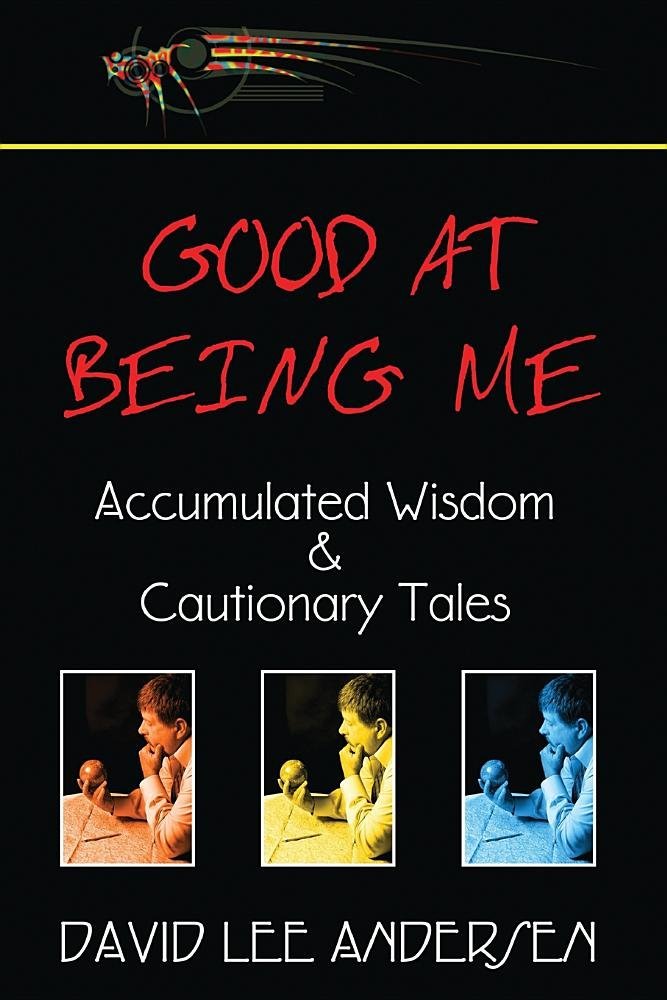
the courage to do so, but we all know what happened. Good At Being Me was published, finally, in 2016, the first in a collection of
several.
I think many of the nine “Directors” that could attend are
here today: John
Silbaugh, Roger Kipp, Chuck Malkerson, Dave Schulz, John Priebe, and Ron Prasek . And several more not present: Alana
Griffith, Jim Ochetti, and Etty DeVeaux. You all helped David
on this fateful day, as you shall soon learn.
So David, then under the email “riojones” (if you recall
that old address), set 15 ground rules:
- · no such thing as a bad idea,
- · defer judgment,
- · think outside the box,
- · keep it positive,
- · no Gail bashing,
- · no looking back – no “I should have’s . . .”,
- · look forward, where will you be in 1, 2, 5 years from now,
- · collect “what if’s”,
- · business (life) as usual does not work,
- · consider doing something unexpected,
- · failure is not an option,
- · Gretzky – go where the puck is going to be,
- · don’t assume anything,
- · what’s next,
- · and how do you measure success.
Now, against this background, I think it is time to hear
David’s own words, and see how we all did – by all, everyone in this room and
around the world. This is David’s Friday
Wisdom, I believe his last, from December 18th, but nine days before
his untimely passing, for I think he has written his own epitaph worth
reflecting upon now:
Dear
Friends and Colleagues,
As we rocket through
the holiday season, we sometimes forget to slow down and be grateful for our
lives as they are... not as we wish they might be...(sorry retail marketers)
but just as they are.
This past week, I was
blessed to have a "killer head cold" put me flat on my back in bed...
I say "blessed", because I was forced to slow down to be grateful for
the Crooked Road (title of my next book) my life journey has taken.
A number of years
back, my life was unexpectedly disrupted by events out of my control. I really
had lost my compass, and didn't quite know which way to go. It was like I was
driving in a race with four flat tires!
At that time, an
amazing thing happened. One of my best friends and colleagues stepped up to
organize a "Board of Directors Meeting" ! He
invited a group my closest friends and colleagues to my country home in
Corcoran. (some of you were there - thank you)
I sat, somewhat
stunned, on my deck, surrounded by people dedicated to giving me much-needed
direction and encouragement... So with flip charts and markers (in best
"Board of Directors meeting style"), I had the unusual privilege of
seeing my perceived value through the eyes of people who genuinely cared about
me.
It was a watershed
event, that I will never forget, and I will be forever grateful for. As a
result, I was once again out of the pits, and back on the race track with a new
set of tires!
And so it only followed
that it was just one year ago, in December, that I received the Louis Lundgren
Award from the American Institute of Architects at International Market Square
in Minneapolis, for dedication to the profession and contributions to the
community. This honor, however, is nothing I feel comfortable resting upon. God
willing, I have much more yet to contribute...
This past year, I have
been blessed with meaningful and exciting work assignments for my "day
job" as an architect and planner. I continued work on the Historic Duluth
Armory; returned to work again for the Mississippi band of Choctaw;
evaluated resort sites in Vietnam; completed a 20-year master plan for
Fontenelle Forest in Omaha... and completed a master plan for North America's
largest Bison Preserve in Manitoba.
Of course I've also
continued my insane ritual of writing at all hours of the day, this past year.
I have shared this with you regularly via "Friday Wisdom", and
have benefited from all of the encouragement you have provided. Thank you for
that.
And thank you too, for
graciously looking past all of my typos and grammatical mis-steps.
Finally, thank you all
for your support of my book. As you know it was nominated for the Minnesota
Book of the Year Award, but sadly, it came in as bridesmaid in the judging this
past January. (I blame the French skating judges). Sales continue to be steady
on Amazon.com and myriad other venues, although I don't intend to give up my
"day job" any time soon.
I was honored to hear
from some of you that you actually have bought copies of my book as gifts for
your friends. (Talk about risk-taking gestures) I take it as the ultimate
recognition. Thank you... and I hope they remain your friends after
reading the book!
All kidding aside, I
want to sincerely thank all of you for your friendship, loyalty and support
(and sometimes tolerance) of my unlikely life adventures over all these years.
You've made it easy to be "Good At Being Me" !
God's Blessings and
"Have yourself a merry little Christmas..."
David
David, from all of us gathered here today and thinking of
you from afar:
Plow ahead to your eternity
on four fully inflated tires!
Rest in peace.
Let God win.
Rest on the wings of
eagles. Rest in light.
Rest in the love and the beauty and the joy you generously shared with
all of us.